stranger to myself is out on October 16th via Ba Da Bing.
‘stranger to myself’ focuses on the trauma, fear and despair felt from PTSD after a life-threatening experience.
“I could still feel there was more. The world just kept spinning. We hit the ground again—I thought I had died. Everything went black for a second. And then, suddenly, the van stopped. The g-forces vanished, but inside me, the spinning didn’t. My body was still. But inside, I kept tumbling.”
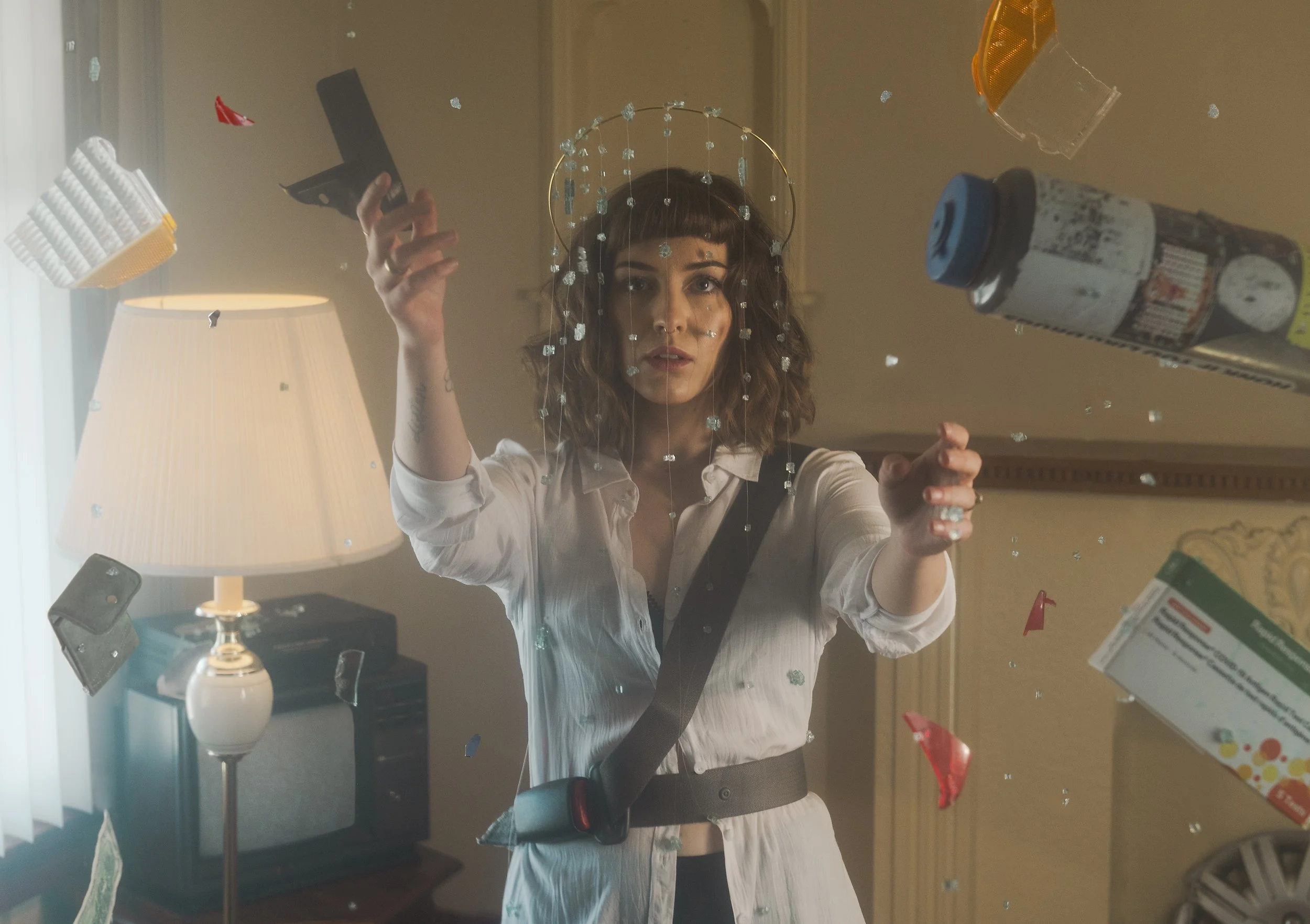
These are not lyrics. They’re excerpts from Laura Hickli’s therapy sessions–transmissions from a fractured mind. Laura Hickli’s album, ‘stranger to myself’ is rooted by a single traumatic moment that lasted just 24 seconds. In 2023, while touring the U.S., her van skidded off the road, spinning 180º into the opposing lane before flying backwards off the highway and rolling three times down a steep slope. As it tumbled down the hillside, she watched her belongings rise around her in slow motion, suspended in eerie stillness, time stretching in the space between life and death. Before she blacked out as her head went through the window, things felt surreal.
“I had no thoughts in my head as I floated through the air,” she says. “It was still. It felt like when you’re in an empty kitchen and the tap is dripping. No panic, no fear, just loneliness and knowing you’re going to die.”
Nobody was seriously injured, but after the crash, her recovery was both physical and psychological. What began as a fear of getting into vehicles spiraled into something deeper: a confrontation with mortality, meaninglessness, and the body’s fragility. The songs that emerged aren’t pretty, polished reflections—they’re raw, unsettling, and painfully human. Feelings that are ugly. Scary. Relentless. For someone with autism, the experience is even more challenging.
"It can be a gift to feel things, everything, so deeply, “ she says, “but sometimes, it's crippling. In any case, PTSD and its symptoms are debilitating, but tied in with the neurodivergent experience of being hyper-attuned, and aware-of-everything-all-at-once, struggling through the after-effects of this accident often left me immobilized, speechless, and frozen in panic. It's really difficult to self-regulate through meltdowns, let alone full-blown physical and visual PTSD flashbacks. I genuinely don't know how I made it through the day sometimes."
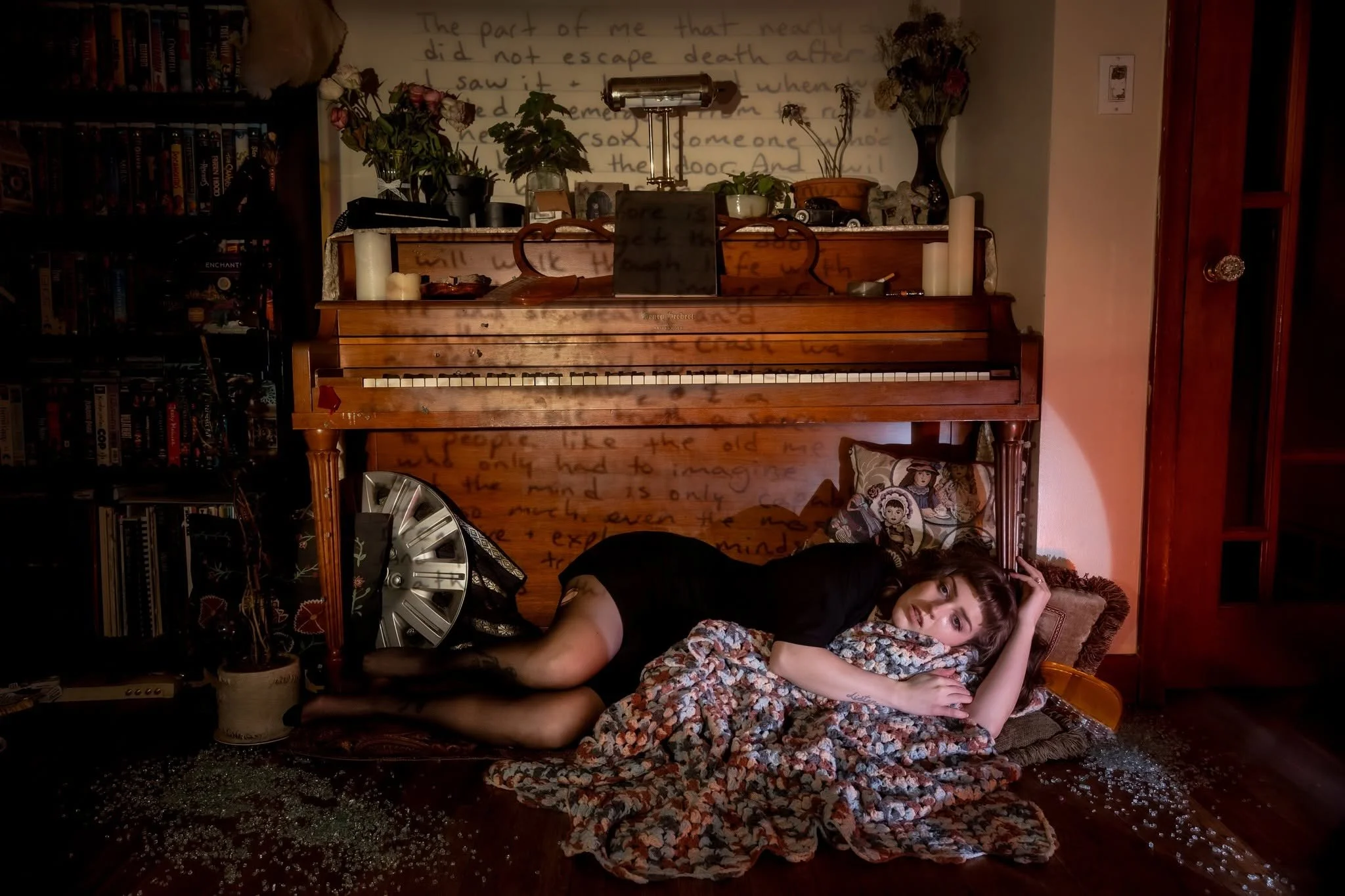
It’s not like Laura hasn’t faced struggles before. She grew up in a highly religious household. Her family joined more and more radically conservative churches, leading her to realize in adulthood how to separate the world she was aware of as a child from the grander one she now perceives. That was the subject of her last release, Both Feet In The World, At Least I Can Stand. “The ability to write these songs and perform them to others rescued me,” she says. “I had an outlet for the battles happening inside my head.” She immersed herself in the musician’s lifestyle, touring heavily throughout North America, until the accident.
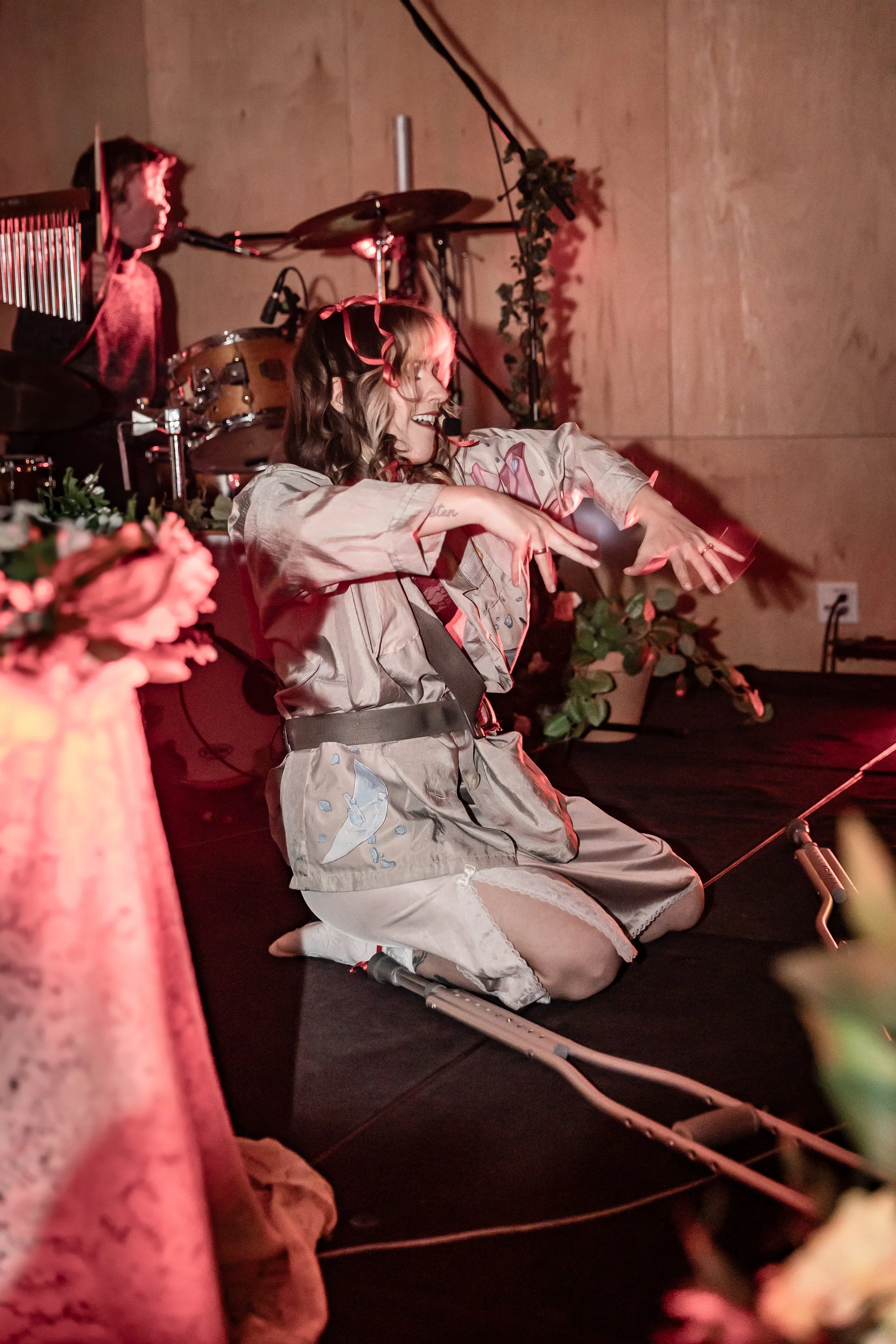
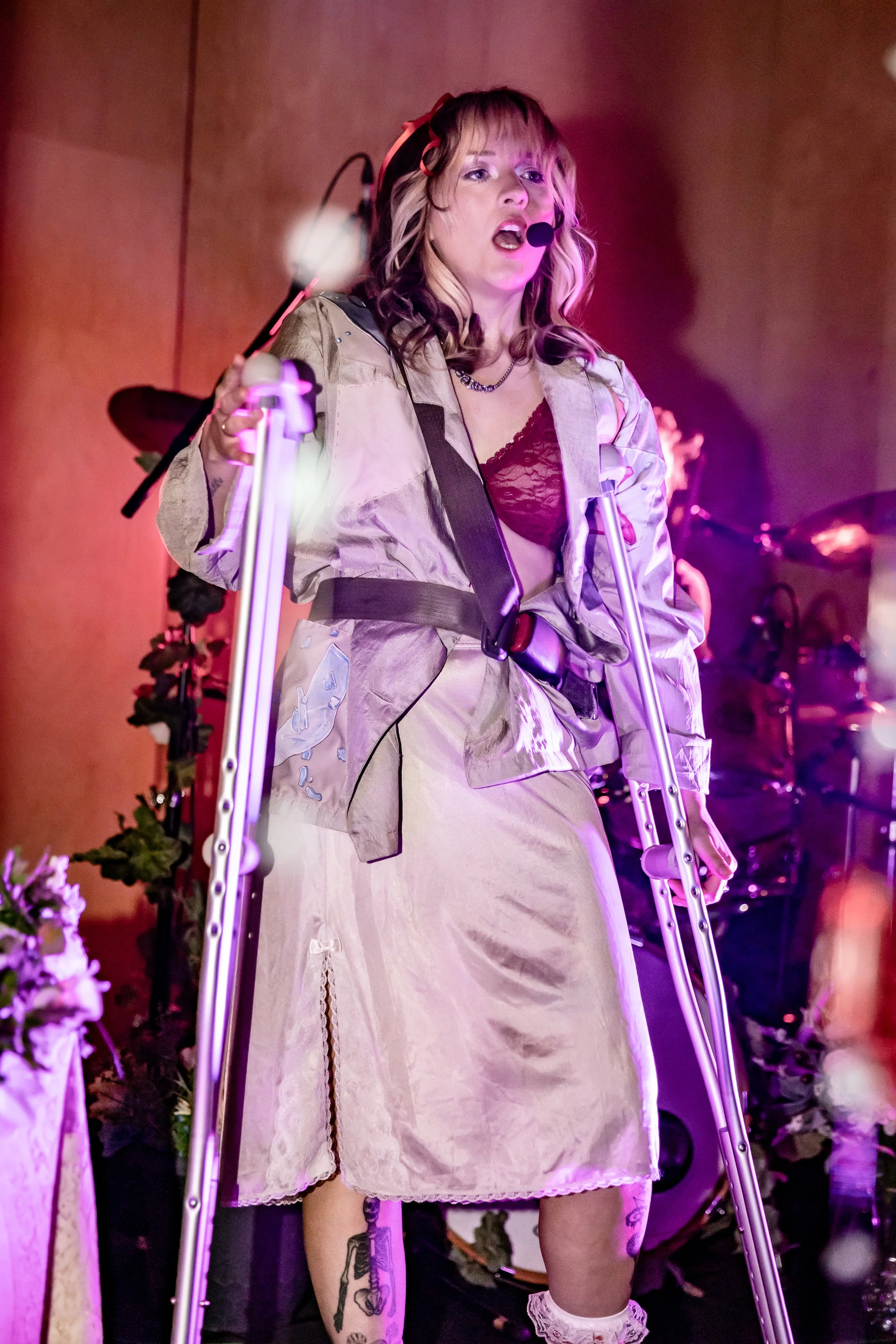
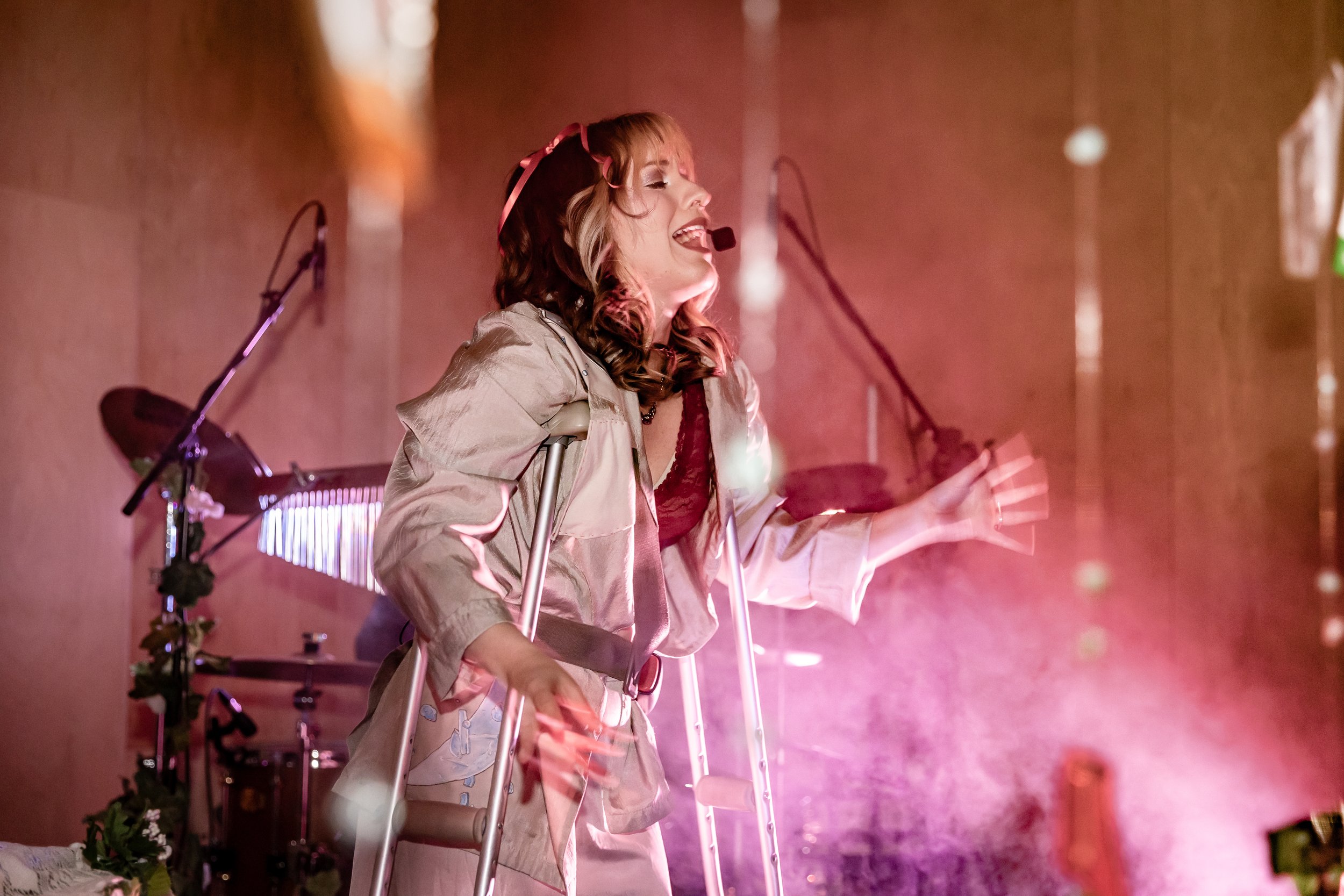
Music has always held immense power for Laura—it’s how she processes, how she connects, how she survives. So even in the depths of PTSD, she knew she had to find her way back to it. Performance is visceral and transformative for her: on stage, she writhes and sways, folding into herself like she’s summoning something from deep within. It’s not only art—it’s communion. To return to that space, she began exposure therapy: a slow, grueling, and deeply personal process that eventually gave her the strength to get back in a van and tour again.
bio continued
‘stranger to myself’ is a sonic journey towards healing. Across the album, she confronts grief, fear, and dissociation on her path to acceptance and growth. Two emotional currents run throughout: songs rooted in loss and anguish, and others cautiously imagining a future beyond survival. These contrasting tones live side by side creating an unsettled emotional world that reflects trauma and recovery. Through this darkness and despair, light emerges.
On “call it off,” Hickli repeats, “Wish things stayed the same / I wish things never changed,” regretting having ever left home instead of staying “under the covers.” Her lyrics pair with swelling, uplifting musical arrangements, a tension that captures the strange coexistence of sorrow and hope. stranger to myself continually pushes and pulls, capturing the complexities of pain and resilience.
On “wake up”, Hickli’s sounds lighter and more expansive. Her lyrics still acknowledge struggle, while the melody is gently optimistic. These moments form the album’s foundation; growth comes not from erasing trauma, but from acknowledging it without letting it rule.
The completion of ‘stranger to myself’ marks Laura Hickli’s latest step towards making peace with those 24 seconds. Recovery is not linear—and never truly complete—but she's found connection through the act of creation and the courage to share her story. And in that, she no longer feels quite so alone.